When you think of Malta in August, you probably picture impossibly blue water, rocky coves, boats floating somewhere in the Mediterranean and at least one Aperol Spritz involved.
And yes, Malta can definitely give you all of that. But after spending a week there, I came home thinking about something completely different. The cities.
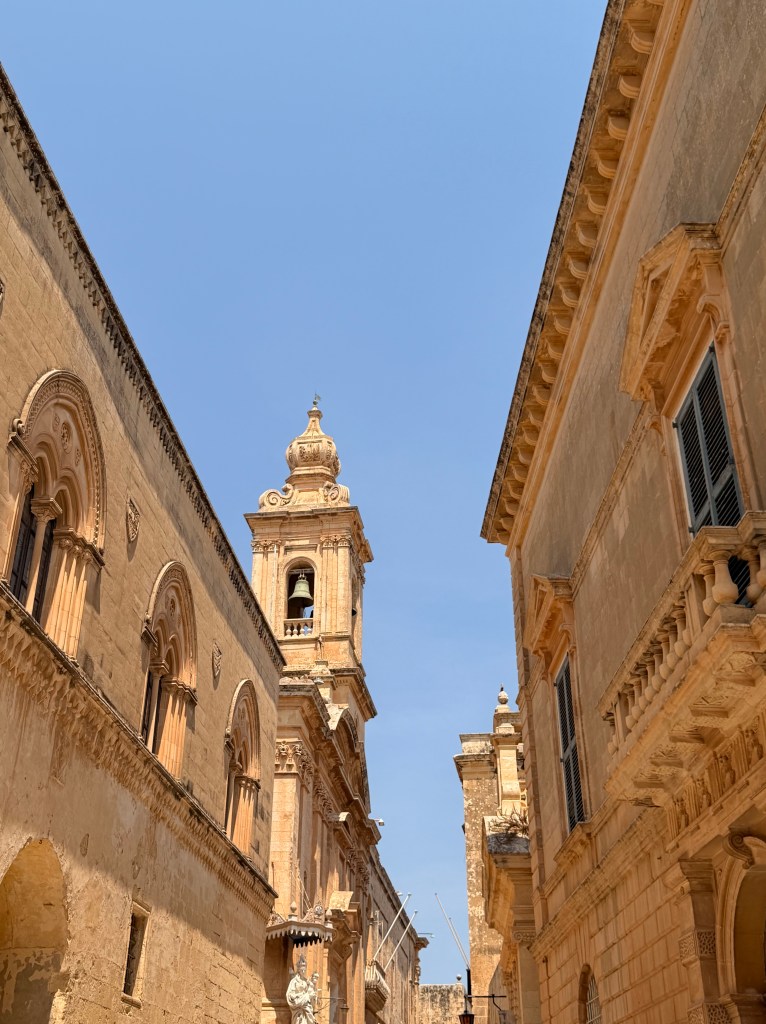
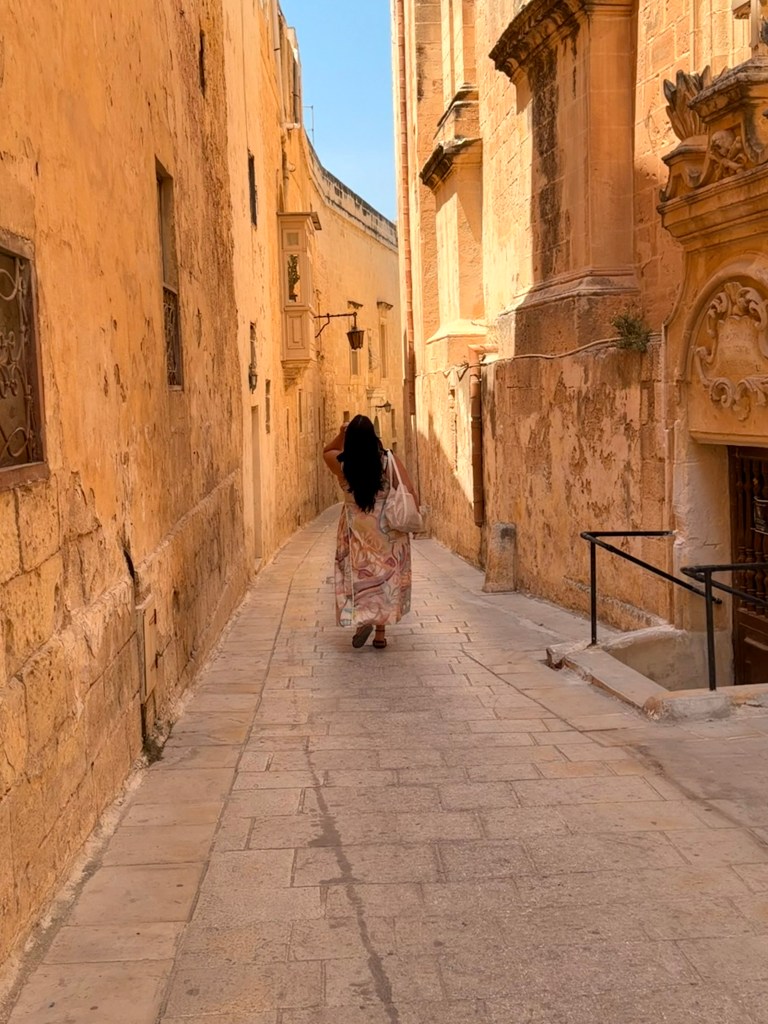
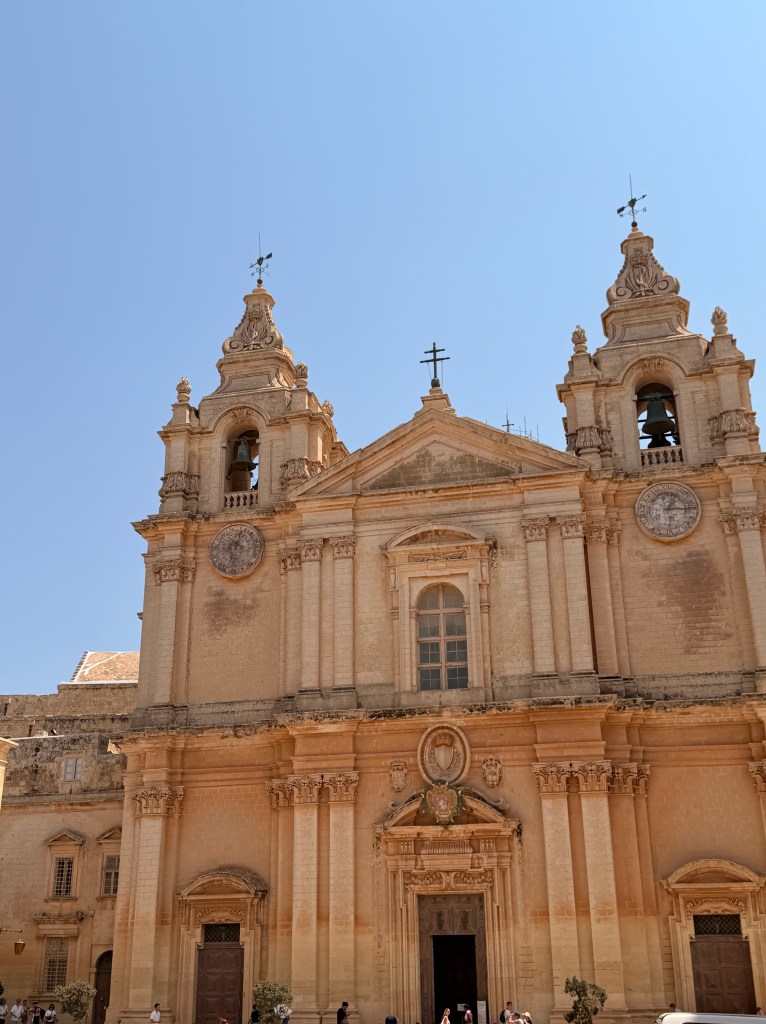
The golden streets. The balconies. The churches hidden behind unassuming façades. I went to Malta expecting a summer holiday. I didn’t expect to become slightly obsessed with its cities.
First things first: Malta in August is… HOT.
And I don’t mean pleasantly-sunny-holiday hot. I mean 33°C during the day and 29°C at night hot.
One of the first things I noticed was how little the temperature seemed to change once the sun went down. You spend the afternoon waiting for that magical evening breeze to arrive and then, at 10 p.m., you check your phone… 29°C. Right.
So yes: if you’re visiting Malta in August, sunscreen, water and breathable clothes are not optional.
The heat also changes the way you explore. Walking around a historical city at midday can become exhausting very quickly, so we soon learnt that slower mornings, strategic stops and evening walks were a much better idea.
Luckily, Malta is particularly beautiful when the sun starts going down.
About those picture-perfect beaches…
Let’s talk about the sea.
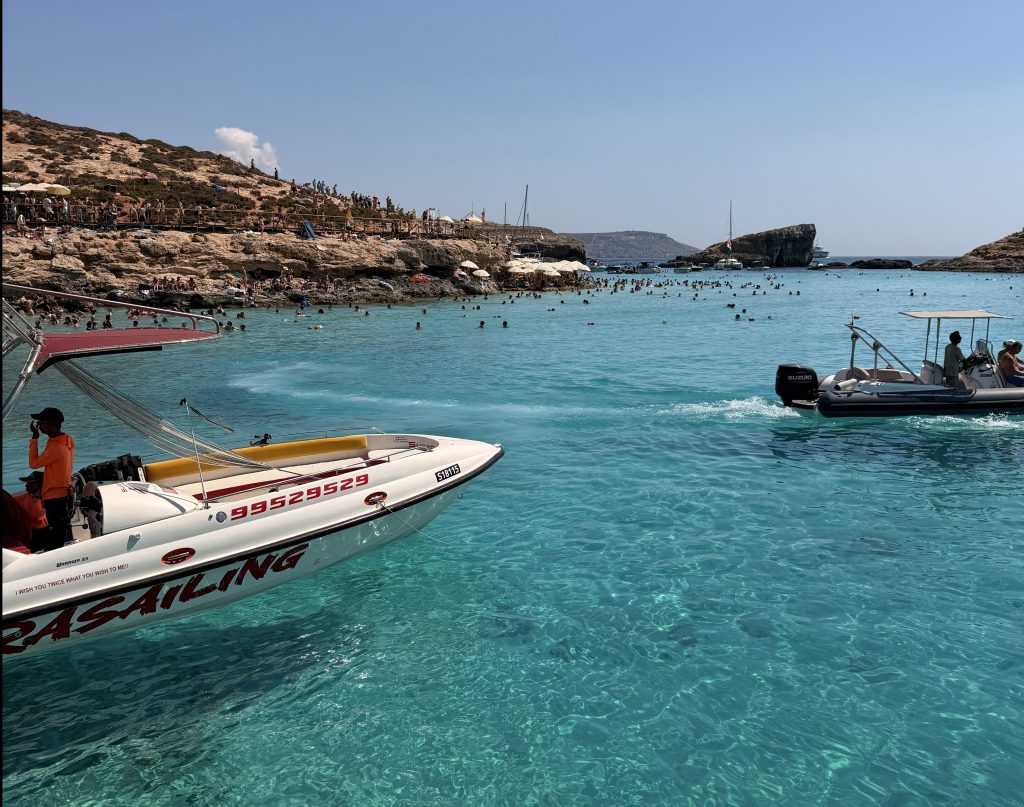
Malta has some genuinely beautiful swimming spots. The colour of the water can be incredible, especially around its rocky coastline and smaller coves.
But if you’re travelling in peak season, I would adjust your expectations slightly.
August means crowds. And unfortunately, during our stay, some of the most popular beaches weren’t quite as pristine as the photographs online might suggest. A few were noticeably less clean than I expected — something that surprised me considering how often Malta is advertised primarily as a beach destination.
Does that mean I wouldn’t go to Malta for the sea? Not at all.
But I wouldn’t go only for the sea. Because reducing Malta to its beaches would mean missing what, for me, turned out to be the best part of the island.
Malta is made for curious travellers
Malta is tiny. And somehow, it contains an almost ridiculous amount of history. Phoenicians, Romans, Arabs, the Knights of St John, the French and the British have all left something behind. Sometimes you don’t even need to enter a museum to notice it.
You just have to walk.
The architecture changes. The street names tell stories. English mixes naturally with Maltese. British red telephone boxes appear against honey-coloured limestone buildings that look completely Mediterranean.
It feels familiar and unfamiliar at exactly the same time. For someone who loves languages and history, this is basically dangerous territory. I wanted to read everything. Every plaque. Every church description. Every historical sign.
Valletta: the city I wasn’t prepared to love this much
If there is one place that completely changed my perception of Malta, it was Valletta.
I expected it to be beautiful. I didn’t expect it to have so much character.
The city is small enough to explore on foot, but every street seems to offer another excuse to stop: colourful enclosed balconies, steep streets leading towards the sea, monumental buildings, tiny cafés and churches that suddenly appear between rows of golden façades.
And then there is the light. Towards sunset, Valletta seems to turn even more golden. This was the Malta I wanted to keep exploring. Not necessarily from a sunbed, but walking through streets and wondering what was around the next corner.
And then there are the Three Cities
Across the Grand Harbour from Valletta lie Vittoriosa, Senglea and Cospicua — collectively known as the Three Cities.
They feel quieter and somehow more intimate. Narrow streets, balconies, old doors, little staircases, boats in the harbour. These were the kinds of places where I found myself slowing down. Not because a guidebook told me there was something I absolutely had to see, but because the streets themselves were interesting enough.
An island built from layers
Perhaps that’s what surprised me most about Malta. It feels layered.
Mediterranean but unmistakably shaped by Britain. European but with strong North African and Middle Eastern echoes. Small enough to cross relatively quickly, yet filled with towns that feel completely different from one another.
And then there is Maltese itself — a Semitic language written using the Latin alphabet, shaped over centuries by Arabic, Sicilian, Italian and English influences.
Obviously, the language teacher in me was delighted. Suddenly, even reading road signs became entertainment.
Would I recommend Malta for a summer holiday?
Absolutely — but perhaps not for the reason you might expect.
If your dream holiday means spending seven days exclusively on immaculate sandy beaches, Malta in the middle of August might not necessarily be my first recommendation. Peak season brings crowds, intense heat and, at least from what I experienced, some popular beaches that could have been better maintained.
But if you want to combine swimming with history, architecture, culture and evenings wandering through beautiful old cities… then Malta becomes much more interesting.
So, YES! Go for the sea. But leave the beach.
Walk through Valletta as the buildings turn golden in the evening light. Get lost in the quieter streets of the Three Cities. Look at the balconies. Step inside the churches. Listen to Maltese being spoken around you.
And don’t be surprised if the places you remember most have absolutely nothing to do with the beach. Mine didn’t.
One week, many Maltas.
I think that’s what I brought home from this trip. There isn’t just one Malta. There’s the Malta of crowded August beaches and bright blue water. There’s the Malta of limestone cities and centuries of history. There’s the loud, busy Malta you meet in the most touristy areas — and the quieter one hiding a few streets away. And perhaps the best way to experience the island is not to choose between them.
Just maybe don’t schedule that uphill walk through Valletta at 1 p.m. Consider that your first Malta travel tip.
Sometimes the best part of an island is what you find after leaving the beach.
Blue Lagoon Comino European Destinations Island Travel Italian Countryside Italian Trips Italy Language & Culture Life Beyond the Classroom Linguistics Malta Travel Maltese Language Mediterranea Travel Summer travel Teacher Travels The Teacher’s Detour Travel & Education


Leave a Reply