Planning a trip to Malta is dangerously easy. You open Instagram, see turquoise water, honey-coloured buildings and little boats floating peacefully in the Mediterranean, and suddenly you’re checking flights.
But there are a few things the postcards don’t tell you.
Malta is beautiful, fascinating and surprisingly full of things to discover — but travelling there in peak summer also comes with crowds, relentless heat, occasionally unpredictable transport and a few expectations that might need adjusting. After spending a week on the island, these are the things I wish someone had told me before I packed my suitcase.
1. August doesn’t cool down after sunset
I knew Malta would be hot in August. What I hadn’t fully considered was that the heat simply… stays.
During our trip, daytime temperatures were around 33°C and even in the evening we regularly had around 29°C. That small temperature difference means you don’t necessarily get the refreshing evenings you might expect after spending the day under the Mediterranean sun.
My advice?
Don’t build an itinerary that requires you to walk around historical sites for hours at midday. Start earlier, take a proper break during the hottest part of the afternoon and save places like Valletta for the late afternoon and evening whenever possible.
Also: WATER. Always water. Future you will be grateful.
2. Malta isn’t really a “sandy beach” destination
This is probably the expectation I would adjust the most.
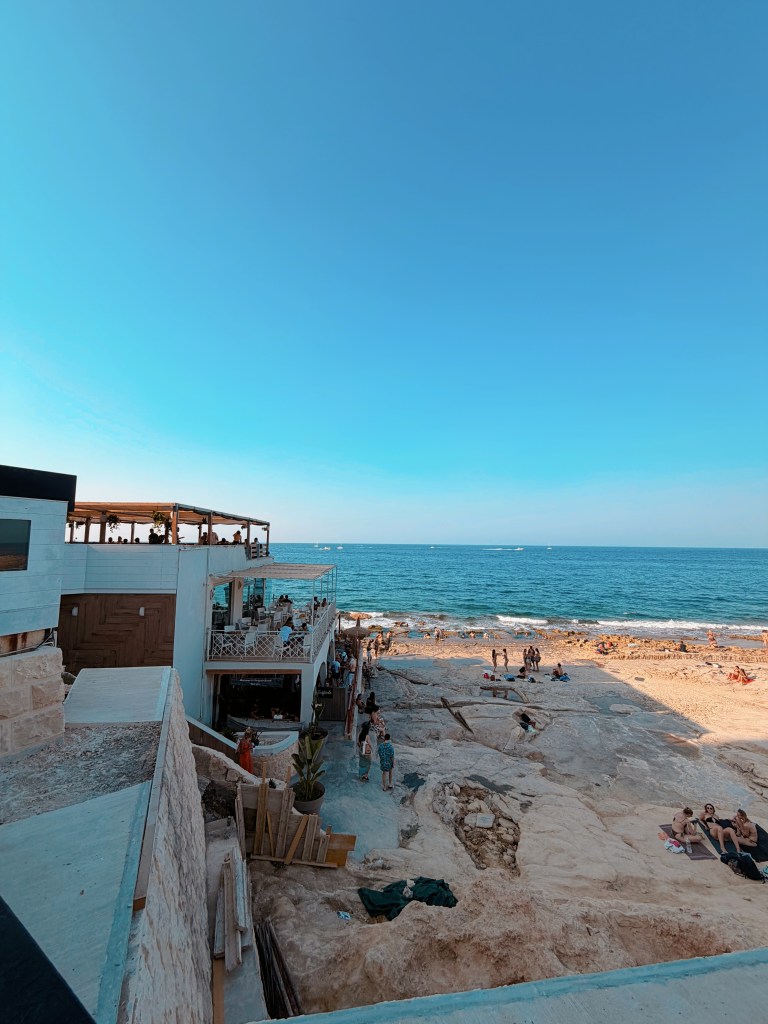
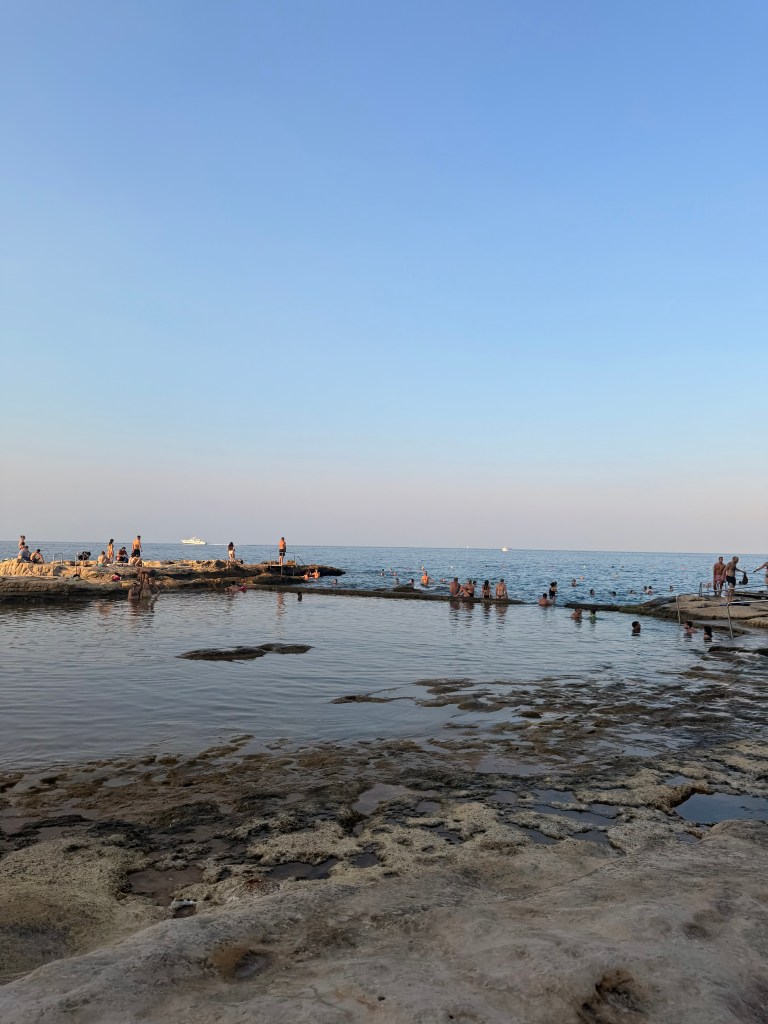
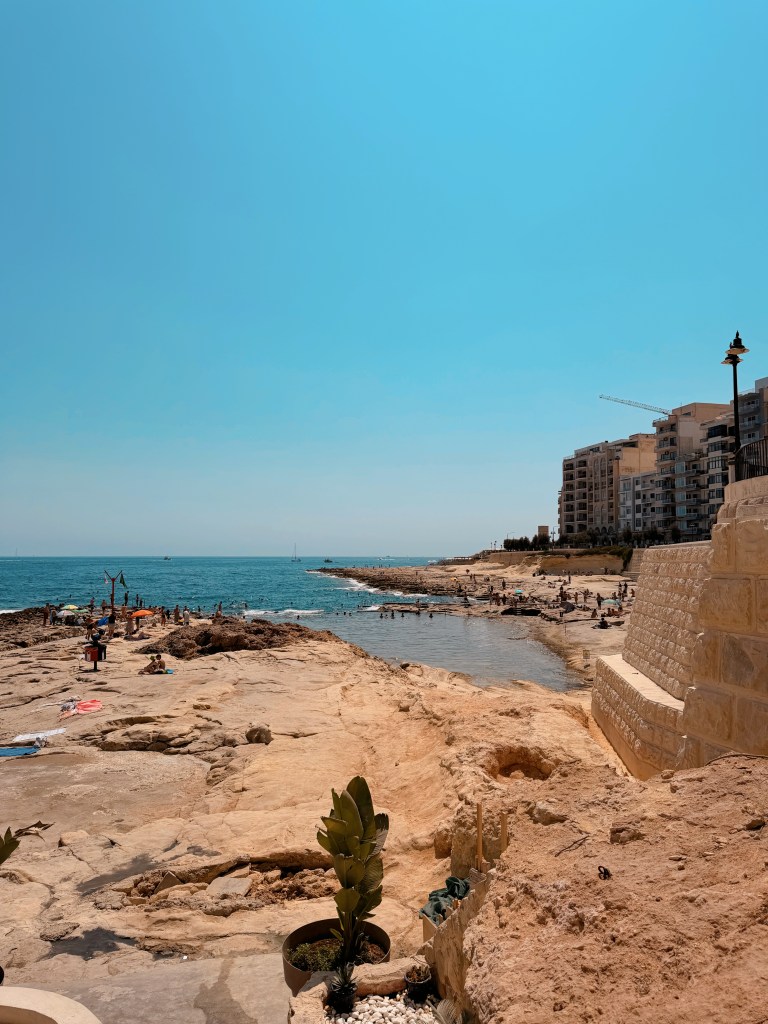
There are sandy beaches in Malta, but much of the coastline is rocky, and some of the best places for swimming don’t necessarily look like traditional beaches at all.
In August, the most famous beaches can also get extremely busy and, during our stay, some weren’t as clean as I expected. So don’t plan your entire trip around finding the perfect stretch of sand.
Instead, research bays, rocky swimming spots and boat trips too. Malta’s relationship with the sea is much more varied than the classic beach photos suggest.
3. Getting around Malta requires a little strategy
Malta is tiny. Which can trick you into thinking:
“Oh, that’s only a few kilometres away.”
Technically? Yes. Practically? Not always.
Uber and Bolt are extremely convenient and we used them more than once, especially when public transport would have required several changes. But convenience comes at a price — particularly in August.
At one point, we checked the price of a ride from Sliema to the Popeye Village and were quoted around €60–70.
For a relatively small island, that was definitely not the number we were expecting to see on our screen. Public buses, on the other hand, cost us only €2.50 per journey, making them a much more budget-friendly option. The downside? Depending on where you’re going, you may need to change buses several times, turning what looks like a short distance on the map into a surprisingly long journey.
So before automatically tapping confirm ride or jumping onto the first bus Google suggests, compare your options.
- Check the bus route.
- Check Uber.
- Check Bolt.
- And, when possible, check whether there’s a ferry.
Sometimes paying a little more will save you a lot of time. Other times, a €2.50 bus will get you there perfectly well. In Malta, there isn’t one transport option that is always the best. The trick is knowing when to use each one.
4. Paceville might not be the nightlife you’re looking for
Before travelling to Malta, you’ll inevitably come across Paceville when researching nightlife. And yes, there is definitely nightlife. A lot of it.
For us, however, Paceville felt a little too chaotic, loud and — there’s really no elegant way of saying this — slightly trashy.
If you’re in your early twenties and looking for clubs, crowds and a very energetic night out, you might have a completely different experience. But if you’re around thirty and your idea of a good evening involves beautiful streets, drinks, dinner and actually being able to hear the person sitting opposite you?
I’d choose Valletta. Every time.
Valletta in the evening has an entirely different atmosphere. Restaurants spill out into the streets, the golden buildings light up and you can wander around after dinner without necessarily needing a plan.
5. Getting to Valletta is easier than it looks
If you’re staying around Sliema, getting to Valletta is actually one of the easiest journeys you’ll make.
The ferry from Sliema to Valletta is quick, convenient and, as a bonus, gives you beautiful views from the water as you approach the city. And it’s only €3.00 per journey (€5.00 for a return ticket).
But there’s another option worth considering: the bus.
And this is where Malta’s geography becomes important. Valletta has hills. Quite a few of them. Taking the ferry means arriving closer to sea level, which is lovely until you realise that the city you want to explore is… up there.
The bus, on the other hand, can leave you right near the main entrance to Valletta, at the top.
After spending an entire day walking around Malta in 33°C heat, this suddenly becomes extremely valuable information. So my recommendation would actually be to try both.
Take the ferry at least once for the experience and the views. Take the bus when your legs start negotiating their resignation.
Sometimes good travel planning isn’t about finding the most scenic route. It’s about avoiding an unnecessary uphill walk in 30-degree heat. Your future self will understand.
6. Gozo and Comino? See them from the water
If you’re going to Malta, I would absolutely make room for Gozo and Comino. But there’s one piece of advice I wish someone had stressed before we went: take a boat trip.
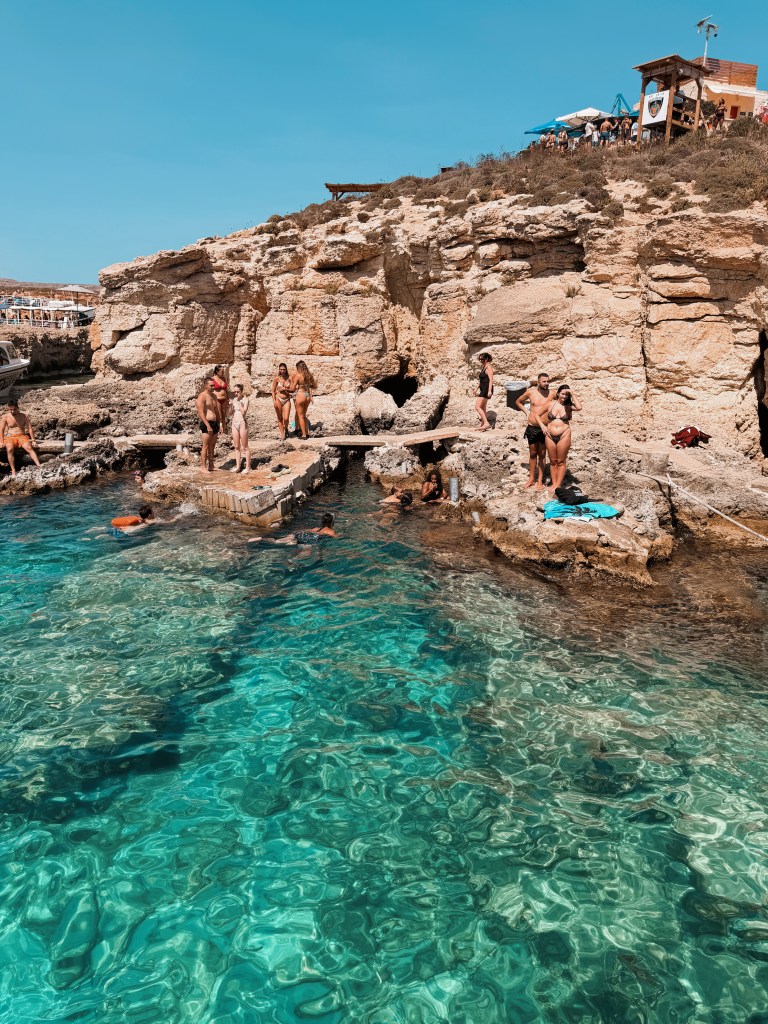
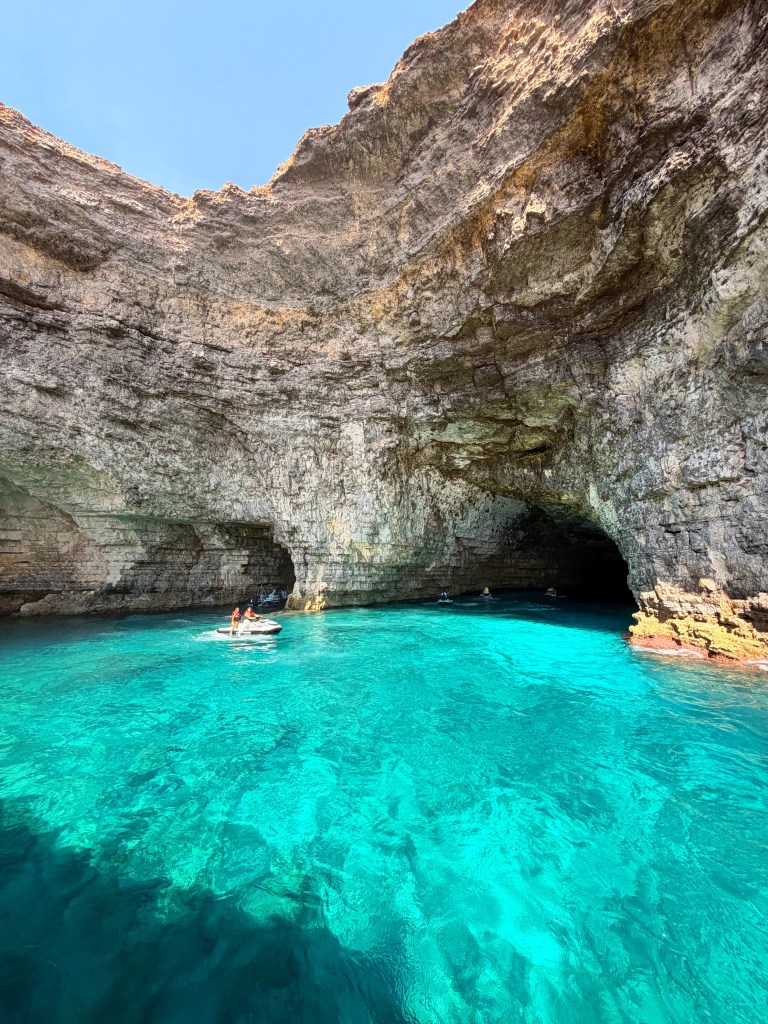
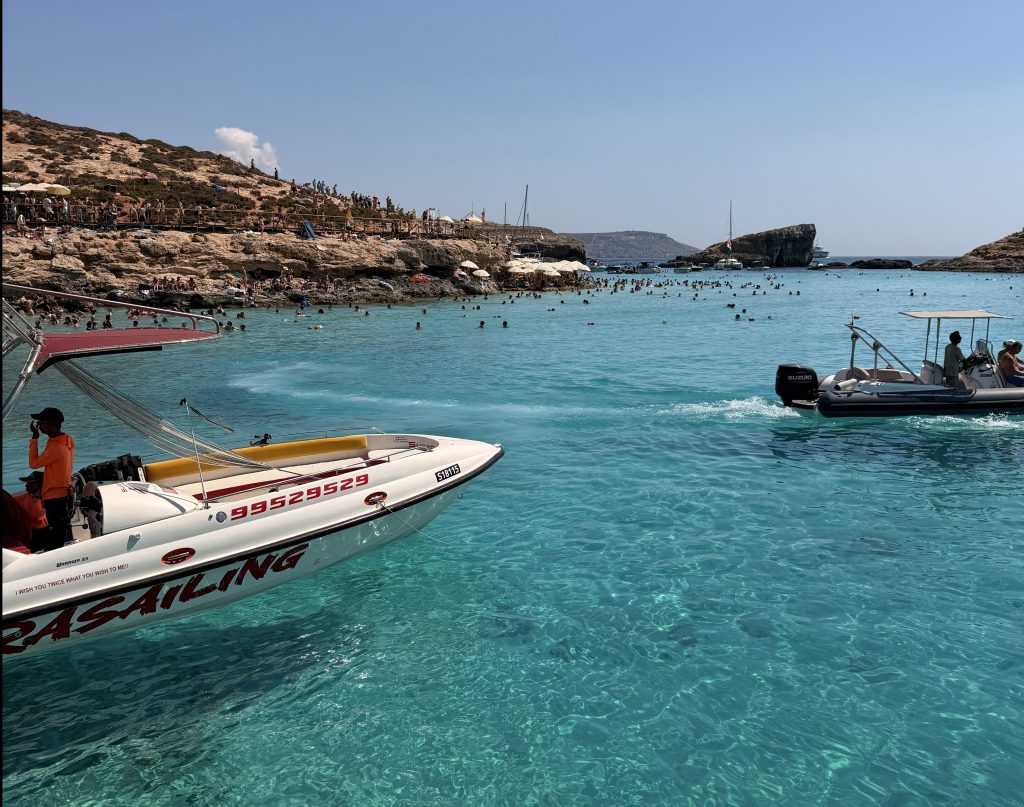
There are plenty of organised excursions available, and we found options on GetYourGuide for around €30–40 per person. Considering that you’re essentially getting an entire day out at sea, it can be surprisingly good value — and, more importantly, it completely changes the way you experience the islands.
You get to see the coastline from the water, stop for swims and reach places that simply don’t feel the same from land.
And then there’s the famous Blue Lagoon. Yes, it really is that blue. No, Instagram didn’t completely lie to you this time. But there’s a catch.
The Blue Lagoon is incredible — if you experience it the right way
The Blue Lagoon is probably one of the most photographed places in Malta, and for once, the colour of the water genuinely lives up to the pictures. It is stunning. The problem is that everyone else knows this too.
If you arrive on foot and try to experience the lagoon from land during peak season, the area can be overwhelmingly crowded. Space is limited and, when we visited, access and swimming arrangements meant that people on shore were concentrated around a smaller, less appealing part of the lagoon.
From a boat, the experience was completely different.
You’re away from the densest crowds, you can swim directly from the boat and, most importantly, you actually get to enjoy that ridiculously turquoise water you’ve travelled there to see.
So if the Blue Lagoon is high on your Malta wishlist, this is one place where I wouldn’t necessarily choose the cheapest possible way of getting there. Book the boat. Your photos will thank you. Your patience will thank you even more.
7. Choose your water wisely
This may be the least glamorous Malta travel tip you’ll read today… but, let’s talk about bottled water.
Malta has several local brands and you’ll see Kristal everywhere. We drank it without giving it a second thought because, well… it’s water. What could possibly go wrong? Our digestive systems had some thoughts on the matter.
Kristal has a noticeably mineral taste and, whether it was the mineral composition itself or simply our bodies not being used to that particular water, let’s just say it didn’t agree with us particularly well.
This obviously doesn’t mean that Kristal will cause problems for everyone — plenty of people drink it every day without spontaneously reorganising their holiday plans.
But if you have a sensitive stomach and notice that things are suddenly feeling a little… unpredictable, consider trying a different bottled water before blaming last night’s dinner. We eventually did. Our intestines appreciated the cultural sensitivity.
See? Not every travel lesson comes from a museum.
8. Choose your base according to the holiday you actually want
Where you stay can change your experience of Malta considerably.
- Do you want nightlife?
- Easy access to restaurants?
- Historical atmosphere?
- A quieter base?
- Better connections for exploring?
Before booking the prettiest hotel you can find, look at the area around it and ask yourself what you realistically want to do every day. A beautiful room isn’t particularly useful if every place you want to visit requires an hour of travelling.
Sliema is great if you want to reach Valletta easily. So anywhere near that area is the perfect spot!
9. Leave room for the detour
Plan your trip. Save your restaurants. Book the things that need booking. Make your colour-coded Google Maps list if that’s your thing.
But leave something empty.
An afternoon. An evening. A couple of hours when you don’t know exactly where you’re going next.
Because Malta has beautiful beaches and famous landmarks, but some of its charm lives between them — down a quiet street, across a harbour, behind a church door or somewhere you stopped simply because it looked interesting.
And if there’s one thing travelling keeps teaching me, it’s this:
the itinerary gets you there. The detours are what you bring home.


Leave a Reply