There are people who go on holiday and look at the sea. There are people who look at the architecture. And then there are language teachers, who apparently go on holiday and start analysing road signs.
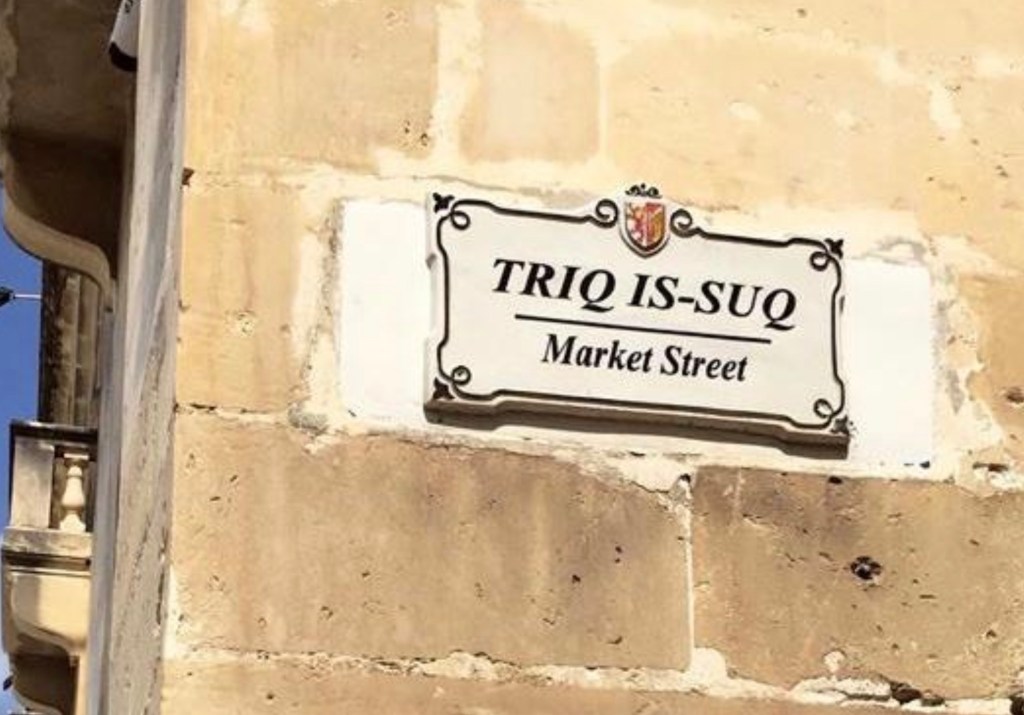
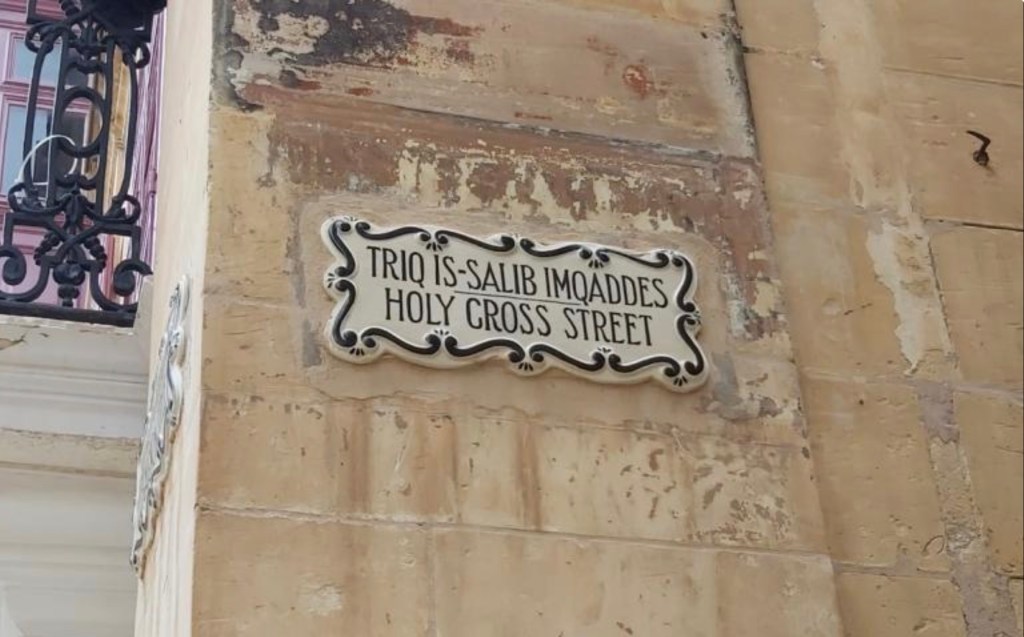
I can’t help it.
And Malta might be one of the worst possible places for this particular occupational hazard. Because the moment you start looking at Maltese, something strange happens… it looks vaguely European, but it sometimes sounds Arabic. Then you recognise something that feels suspiciously Italian. Five minutes later, someone switches effortlessly into English.
So naturally, I had questions. And it turns out that the Maltese language might be one of the best ways to understand the island itself.
Wait… is Maltese Arabic?
Well, yes. But also very much no.
Maltese is a Semitic language, meaning that it belongs to the same language family as Arabic and Hebrew. More specifically, it developed from the variety of Arabic spoken in medieval Sicily and Malta (usually referred to as Siculo-Arabic).
Over the centuries, however, Malta became increasingly separated from the Arabic-speaking world and came into intense contact with Sicily, Italy and, eventually, Britain.
The result is the wonderfully complicated language you hear today.
Its grammatical foundations remain Semitic, but centuries of contact have filled its vocabulary with words from Sicilian, Italian and English. So if Maltese occasionally makes your brain think: Arabic? Italian? English? What exactly am I listening to?
Congratulations. Your brain is doing just fine.
Arabic grammar wearing European clothes
Here’s where things get even more interesting. Maltese didn’t simply replace its Arabic foundations with Italian vocabulary. The Semitic structure survived.
Like Arabic and other Semitic languages, much of Maltese vocabulary is organised around consonantal roots, with different patterns producing related words. But then centuries of Sicilian and Italian contact added an enormous Romance layer to the language, followed later by English during British rule.
In other words, Maltese didn’t choose between its different histories. It kept them.
And yet it’s written in the Latin alphabet. This was probably the first thing that fascinated me. Despite its Arabic origins, Maltese isn’t written using Arabic script. It uses a modified Latin alphabet — and is considered the only Semitic language with a standard writing system based on it.
Which means you encounter words that look like this:
għ
ħ
ċ
ġ
ż
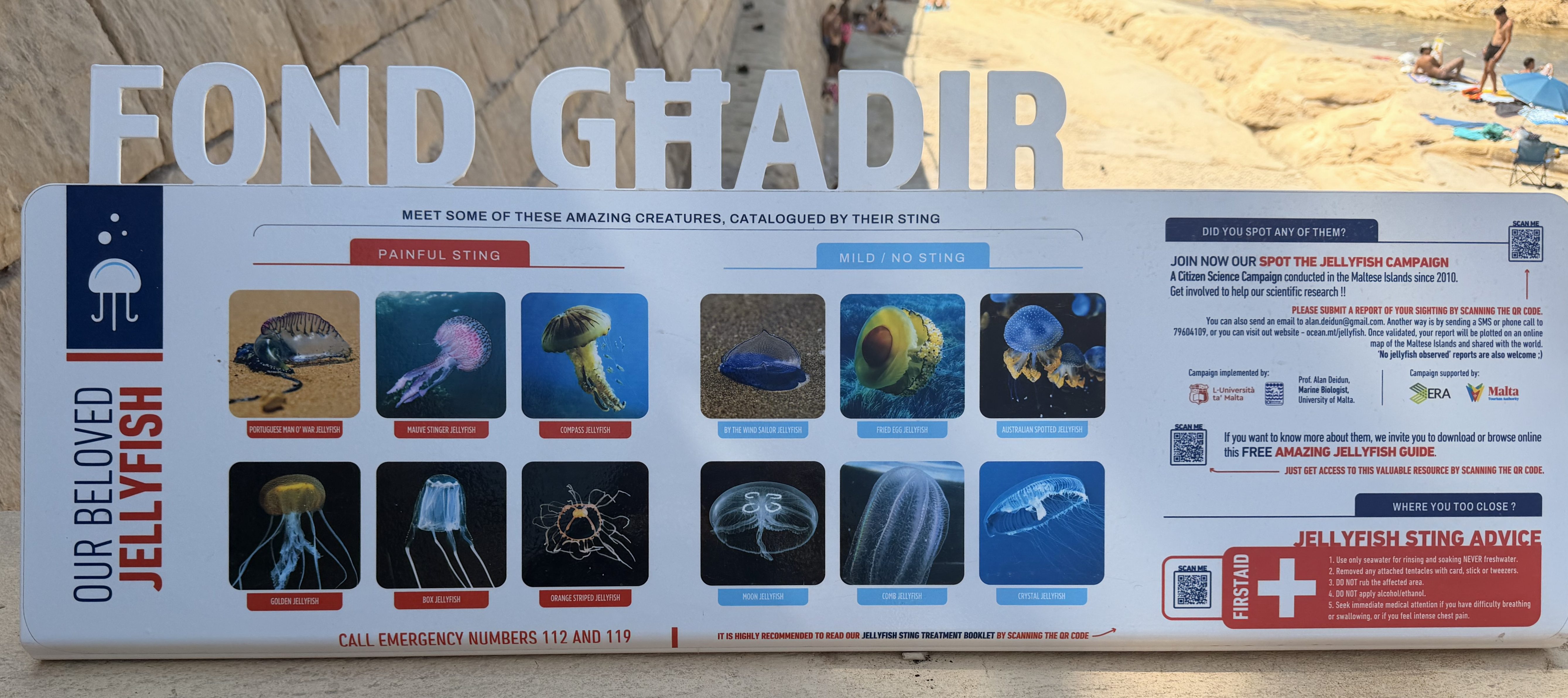
Some of the letters are relatively friendly.
- ċ sounds roughly like the ch in church.
- ġ is similar to the j in jam.
- x — plot twist — sounds like sh.
- q represents a glottal stop: that little interruption in airflow you can hear in some pronunciations of English (like the uh-oh or Cockney bottle).
Then there’s għ.
In modern standard Maltese it is generally not pronounced as a consonant of its own, although it can affect the vowels around it. It survives partly because it preserves something of the language’s history: sounds that existed in earlier Maltese and ultimately connect back to Arabic.
Basically, Maltese spelling comes with archaeological evidence built in. Language teachers love this sort of thing. Normal people may continue enjoying their Aperol Spritz.
Italian speakers: prepare for little moments of satisfaction
As an Italian, walking around Malta comes with a peculiar linguistic game. Every now and then you see or hear a word and think: Hang on. I know that.
That’s because Sicilian and Italian have had an enormous influence on Maltese vocabulary. This contact lasted for centuries, particularly in areas such as culture, administration, religion, law, crafts and education. Italian later became an important language of culture and administration under the Knights of St John.
Words were borrowed, adapted and made Maltese. And that’s what makes the language so fascinating to listen to as an Italian speaker. You won’t understand Maltese simply because you speak Italian — not even close. But every now and then the language throws you a tiny linguistic breadcrumb.
And obviously you feel disproportionately proud of yourself for recognising it.
And then Britain entered the chat
Malta came under British rule in the nineteenth century and remained part of the British Empire until independence in 1964. Unsurprisingly, English left a significant linguistic footprint.
Today, Maltese and English are both official languages of Malta, and English remains deeply embedded in everyday life, education and public communication. English words have also entered Maltese itself — and this process is still very much alive.
In fact, the National Council for the Maltese Language has official rules dealing specifically with how English loanwords should be written in Maltese.mImagine having so many English words entering your language that you need an official document explaining what to do with them.
That’s why, sometimes, they simply use both Maltese speakers can move between Maltese and English. Sometimes within the same conversation. Sometimes within remarkably little time. This kind of code-switching isn’t some linguistic accident: the relationship between Maltese and English has been studied extensively, including how speakers alternate between the two languages in schools and everyday communication.
Maltese isn’t “broken Arabic”
And it isn’t Italian with unusual spelling. This is probably the most important thing to understand. Languages shaped by intense contact sometimes get described as mixtures, as though someone simply threw Arabic, Italian and English into a linguistic blender.
But Maltese is a language in its own right. It developed its own standardised orthography, literary tradition and grammar, and became an official language of Malta in 1934. Today it is also one of the 24 official languages of the European Union.
And perhaps that’s why I find it so interesting. Its history isn’t hidden. You can almost see it inside the words. Arabic foundations. Sicilian and Italian layers. English additions.
All written using an alphabet that had to adapt to sounds ordinary Latin letters couldn’t quite handle.
Curious enough to actually try some Maltese? I’ve put togheter a few words worth packing for your trip. → Read: “Speak a little Maltese”


Leave a Reply